Abortion Services in Delhi: Expert Information for Safe and Legal Pregnancy Termination
Abortion is a medical procedure used to end a pregnancy safely under the supervision of a qualified healthcare professional. Access to safe abortion services is an important aspect of women’s reproductive healthcare and helps protect maternal health and well-being. Women may seek abortion services for various medical, personal, social, or pregnancy-related reasons.
In India, abortion is legal under specific circumstances as outlined by the Medical Termination of Pregnancy (MTP) Act. Modern medical advancements have made abortion procedures safer, more effective, and less invasive than ever before when performed by trained gynecologists.
This comprehensive guide explains abortion services in Delhi, including medical abortion, surgical abortion, eligibility criteria, safety considerations, recovery, risks, legal aspects, and frequently asked questions.
Modern abortion procedures are safer and more effective than ever. Women can explore the differences between ⚖️ Medical Abortion vs Surgical Abortion to understand which option may be suitable based on pregnancy duration and medical condition.

Before choosing any abortion method, it is important to understand legal eligibility, procedure costs, recovery expectations, and follow-up care. You may also find our detailed guide on 💰 Abortion Cost in Delhi helpful for planning treatment and understanding available options.
Understanding Abortion Services
Abortion services refer to medical care provided to safely terminate a pregnancy. Depending on gestational age, medical history, and clinical circumstances, a gynecologist may recommend either:
- Medical abortion
- Surgical abortion
- Specialized abortion care for complex pregnancies
The choice of procedure depends on several factors, including pregnancy duration, ultrasound findings, medical conditions, and patient preferences.
Women seeking abortion services should always consult a qualified gynecologist rather than relying on unverified information or self-medication.
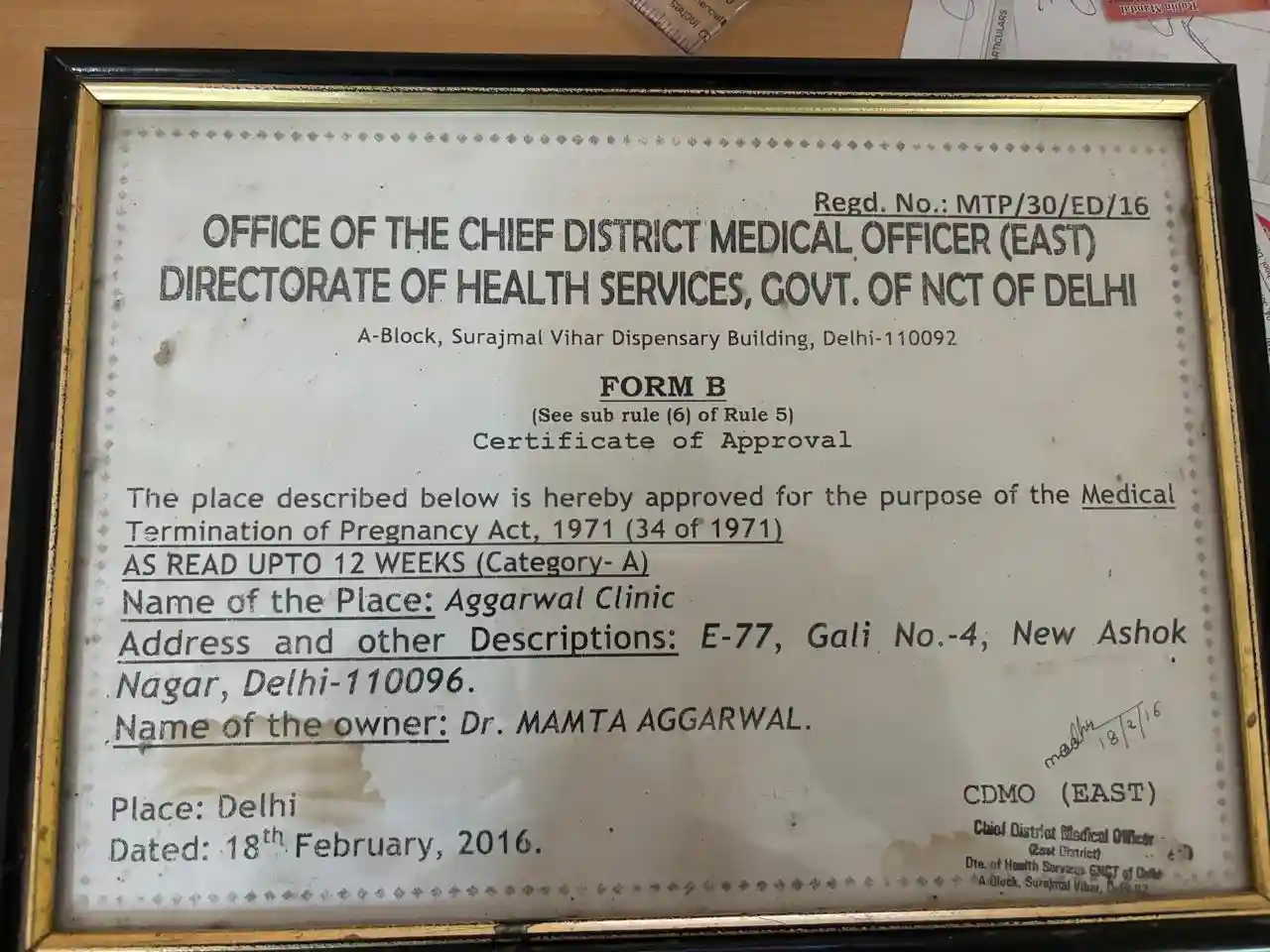
we do abortion at only government registered mtp centre.Agrawal Clinic is registered under the Medical Termination of Pregnancy (MTP) Act and provides abortion-related services in accordance with applicable Indian laws and regulations.
Delhi Govenment mtp registration number-MTP/30/ED/16
Link-See mtp registration certificate
👉 If you are considering ending an early pregnancy, learn about the complete process, medicines, eligibility, and safety precautions in our detailed guide on 🏥 Medical Abortion in Delhi.
👉 Women seeking a clinic-based procedure can also understand the steps, recovery period, and benefits of 🔬 Surgical Abortion Services in Delhi before making a decision.
Proper follow-up care helps reduce complications and supports faster recovery. Women experiencing heavy bleeding, fever, or severe abdominal pain should seek medical attention immediately and review our guide on 🩺 Post-Abortion Care and Recovery Tips.
Understanding your legal rights is equally important. Learn more about eligibility criteria, confidentiality protections, and gestational limits under Indian law in our comprehensive guide on ⚖️ Abortion Laws in India and Delhi.
Why Women Seek Abortion Services
Women may consider abortion services for various reasons:
- Unplanned pregnancy
- Contraceptive failure
- Medical complications
- Fetal abnormalities
- High-risk pregnancy conditions
- Personal or social circumstances
- Mental health considerations
- Pregnancy resulting from sexual assault
Every situation is unique and requires individualized medical assessment and counseling.
Medical Abortion: What You Need to Know
Medical abortion is a non-surgical method of terminating an early pregnancy using prescribed medications.
It is typically recommended during early pregnancy after proper evaluation by a gynecologist.
How Medical Abortion Works
Medical abortion generally involves medications that:
- Stop the pregnancy from progressing.
- Cause the uterus to contract.
- Expel pregnancy tissue naturally.
The process may take several hours to a few days depending on individual circumstances.
Advantages of Medical Abortion
- No surgery required
- No anesthesia needed
- Can be performed in early pregnancy
- High success rate
- Less invasive than surgery
- Faster return to routine activities
Who May Be Suitable for Medical Abortion?
A gynecologist may recommend medical abortion for women who:
- Are in early pregnancy
- Have no contraindications to the medications
- Can attend follow-up appointments
- Understand the procedure and recovery process
Proper ultrasound evaluation is essential before proceeding.
Surgical Abortion: Overview and Procedure
Surgical abortion is a safe medical procedure performed by trained gynecologists in a clinical setting.
It may be recommended when:
- Pregnancy is beyond the recommended period for medical abortion
- Medical abortion is unsuccessful
- Immediate completion is preferred
- Medical conditions require surgical management
Common Surgical Abortion Procedures
Depending on gestational age, procedures may include:
- Vacuum aspiration
- Suction evacuation
- Dilatation and evacuation (D&E)
The procedure is performed under appropriate medical supervision with strict safety protocols.
Benefits of Surgical Abortion
- Quick procedure
- High effectiveness
- Predictable outcome
- Short recovery period
- Immediate completion
Medical Abortion vs Surgical Abortion
| Feature | Medical Abortion | Surgical Abortion |
|---|---|---|
| Procedure Type | Medication | Clinical Procedure |
| Suitable for | Early Pregnancy | Wider Gestational Range |
| Anesthesia | Usually Not Required | May Be Required |
| Duration | Several Hours to Days | Usually Short Procedure |
| Follow-Up | Important | Important |
| Recovery | Variable | Generally Quick |
A gynecologist will recommend the most appropriate option based on individual circumstances.
Safety of Abortion Procedures
When performed under medical supervision, abortion is considered one of the safest healthcare procedures.
According to the World Health Organization (WHO), safe abortion significantly reduces complications associated with unsafe pregnancy termination.
Authoritative Information:-WHO fact sheet
Key safety measures include:
- Pregnancy confirmation
- Ultrasound assessment
- Medical evaluation
- Qualified gynecologist supervision
- Follow-up care
- Emergency support when required
Unsafe abortion practices should always be avoided.
Legal Status of Abortion in India
India allows abortion under the Medical Termination of Pregnancy (MTP) Act and subsequent amendments.
Women may be eligible for abortion under specified legal circumstances.
Important legal considerations include:
- Consent requirements
- Gestational limits
- Medical indications
- Special circumstances recognized by law
Authoritative Source:-moh&fw
Women seeking abortion services should obtain information from qualified healthcare providers rather than relying on myths or misinformation.
Preparing for an Abortion Procedure
Before undergoing abortion services, your gynecologist may recommend:
Medical Evaluation
- Detailed medical history
- Physical examination
- Pregnancy confirmation
Ultrasound Assessment
Ultrasound helps determine:
- Pregnancy location
- Gestational age
- Pregnancy viability
Laboratory Investigations
Depending on individual circumstances:
- Blood tests
- Blood group assessment
- Additional investigations
Counseling
Counseling helps women understand:
- Available options
- Procedure details
- Risks and benefits
- Recovery expectations
What to Expect During Medical Abortion
Women undergoing medical abortion may experience:
- Cramping
- Bleeding
- Passage of pregnancy tissue
- Temporary discomfort
- Fatigue
These symptoms vary among individuals.
Close communication with a healthcare provider is essential during the process.
What to Expect During Surgical Abortion
During surgical abortion:
- Pre-procedure assessment is completed.
- Appropriate anesthesia or pain management is provided.
- The procedure is performed under sterile conditions.
- Recovery monitoring follows.
Most women return home the same day after medical clearance.
Recovery After Abortion
Recovery varies depending on the procedure performed.
Physical Recovery
Common experiences include:
- Mild cramping
- Light bleeding
- Fatigue
- Temporary discomfort
Emotional Recovery
Women may experience a range of emotions.
Support from healthcare providers, family members, and counselors can be beneficial.
Follow-Up Care
Follow-up appointments help ensure:
- Complete recovery
- Resolution of symptoms
- Absence of complications
Warning Signs After Abortion
Seek immediate medical attention if you experience:
- Heavy bleeding
- Severe abdominal pain
- High fever
- Foul-smelling discharge
- Dizziness
- Persistent symptoms
Prompt medical evaluation helps prevent complications.
Possible Risks and Complications
Although abortion is generally safe, potential complications may include:
- Infection
- Excessive bleeding
- Incomplete abortion
- Medication failure
- Retained tissue
The risk of serious complications remains low when care is provided by qualified professionals.
Future Fertility and Pregnancy
A common concern among women is whether abortion affects future fertility.
Most women can become pregnant again after a safe and uncomplicated abortion.
Future fertility generally depends on overall reproductive health rather than the abortion procedure itself.
Contraception After Abortion
Discuss contraception with your gynecologist after the procedure.
Available options may include:
- Oral contraceptive pills
- Intrauterine devices (IUDs)
- Condoms
- Injectable contraceptives
- Long-acting reversible contraception
Family planning helps prevent unintended pregnancies.
Myths and Facts About Abortion
Myth: Abortion always causes infertility.
Fact: Safe abortion performed by qualified professionals generally does not cause infertility.
Myth: Medical abortion is dangerous.
Fact: Medical abortion is considered safe when prescribed appropriately.
Myth: Surgical abortion always requires hospitalization.
Fact: Many surgical procedures are completed as day-care treatments.
Myth: Abortion is illegal in India.
Fact: Abortion is legal under specified conditions under Indian law.
Choosing the Right Gynecologist for Abortion Services
When selecting a healthcare provider, consider:
- Qualifications
- Experience
- Safety standards
- Counseling services
- Follow-up care
- Patient-centered approach
Women should seek treatment from registered healthcare professionals and accredited facilities.
Conclusion
Abortion services are an essential component of comprehensive women’s healthcare. Whether a woman requires medical abortion or surgical abortion, safe and legal care under the supervision of a qualified gynecologist is critical.
Modern abortion procedures are highly effective and generally safe when performed according to established medical guidelines. Understanding available options, legal considerations, recovery expectations, and follow-up care empowers women to make informed healthcare decisions.
If you are considering abortion services, consult a qualified gynecologist for personalized evaluation, counseling, and treatment recommendations.
Read more
Everything you need to know about abortion costs in Delhi, including medical vs surgical procedures, hidden costs, and how to choose a safe clinic.
Early pregnancy can be exciting, confusing, and sometimes overwhelming. Many women experience physical and emotional changes even before missing a period.
Pregnancy is a beautiful and transformative journey, and for expectant mothers in India, it often comes with a unique set of dietary advice,
Surgical abortion is a safe and commonly performed medical procedure used to terminate pregnancy, especially in the second trimester or when medical abortion is not suitable
Link-Surgical Abortion in Delhi
Choosing between medical abortion and surgical abortion can be confusing. In this video, you’ll understand the difference, safety, cost, recovery time, and which option is best for you based on your pregnancy stage.
Short Introduction Understanding what happens during an abortion can help reduce anxiety and confusion. In this educational video, Dr. Mamta Agrawal explains the abortion process step by step, including consultation, medical evaluation, procedure, recovery, and aftercare
Frequently Asked Questions (FAQs)
1. What are abortion services?
Abortion services include medical evaluation, counseling, medical abortion, surgical abortion, follow-up care, and reproductive health support.
2. Is abortion legal in India?
Yes. Abortion is legal under specific conditions as outlined by the Medical Termination of Pregnancy (MTP) Act.
3. What is medical abortion?
Medical abortion uses prescribed medications to terminate an early pregnancy without surgery.
4. What is surgical abortion?
Surgical abortion is a clinical procedure performed by a qualified gynecologist to safely terminate a pregnancy.
5. Which is safer: medical abortion or surgical abortion?
Both methods are considered safe when performed under appropriate medical supervision.
6. How long does recovery take after abortion?
Most women recover within a few days to a few weeks depending on the procedure and individual health factors.
7. Can abortion affect future fertility?
Safe abortion procedures generally do not affect future fertility.
8. What symptoms should prompt immediate medical attention?
Heavy bleeding, severe pain, fever, dizziness, and foul-smelling discharge require prompt medical evaluation.
9. Can unmarried women access abortion services in India?
Indian law permits eligible women, including unmarried women, to seek abortion services under applicable legal provisions.
10. Why is follow-up care important after abortion?
Follow-up care helps ensure complete recovery, identify complications early, and provide contraception and reproductive health guidance.
